

Akwaaba! Whether it’s your first trip or your tenth trip home, the first hour after landing sets the tone. Here’s exactly what to expect at Accra International Airport, and what to sort before you fly so you walk out calm, connected and with the right driver.
Rules for entry, health and money change. Everything below was checked against official sources on 17 October 2026. Always confirm with the official source we link to.
Before you fly: three things to sort at home
1. Your visa (most non-African passports). UK, Irish, EU, US and most other non-African passport holders need a visa before they fly. There is no visa on arrival for these passports. Since 25 May 2026 Ghana has an official online e-Visa at evisa.immigration.gov.gh. Standard processing is stated as 96 hours, but apply a few weeks ahead anyway. Have ready:
- a passport valid for at least 6 months beyond your trip, with blank pages
- proof of accommodation
- a return itinerary
- a recent bank statement
- your yellow fever certificate (you upload it)
Apply only on that portal or through a Ghana embassy or high commission. Never use unofficial “visa agency” websites.
- African passport holders: since 25 May 2026 you are exempt from visa fees. You still apply online before travel, on the same portal.
- ECOWAS citizens: visa-free as before.
- Dual Ghanaian nationals: with a dual-nationality card or a Ghanaian passport you don’t need a visa.
2. Your yellow fever certificate. This is mandatory for every traveller aged 9 months and over, and it is checked when you land. Get the vaccine at least 10 days before travel from a registered yellow fever centre. One dose is valid for life. While you’re at the clinic, ask about malaria tablets; a GP or travel clinic visit 6-8 weeks before you fly is ideal.
3. Your mobile data. Decide now, because it changes what you do at the airport (more below).
Which airport and which terminal?
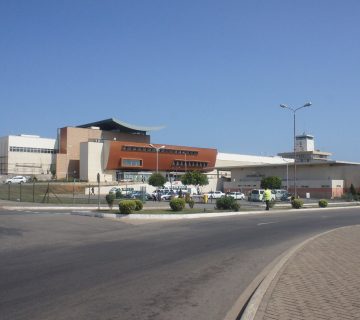
You’ll land at Accra International Airport (ACC). It was renamed from Kotoka International Airport on 23 February 2026, so you’ll still hear most people call it “Kotoka”. International flights use Terminal 3; domestic flights (for example on to Kumasi or Tamale) use Terminal 2.
Good news if you’re coming from Europe: London-Accra is about 6.5 hours and Ghana is on GMT all year, so jet lag is minimal. There’s no non-stop from Dublin. Irish travellers connect through London, Amsterdam, Brussels, Lisbon or Istanbul.
Step by step through the airport
- Immigration: your passport and e-Visa are checked.
- Port Health: your yellow fever certificate is checked. Keep it with your passport, not in your checked bag.
- Baggage reclaim.
- Customs.
As of October 2026 there is no arrival or departure tax and no online pre-registration or health form for visitors.
Carrying cash? You can bring up to US$10,000 (or the equivalent) without declaring it. Above that, you must declare it on customs form FX-5 and show your departure country’s declaration. These are Bank of Ghana rules since 1 September 2025.
Getting connected
You have two good options:
- A travel eSIM bought before you fly, such as Vibqo’s Ghana eSIM (our sister brand). You get data from the moment you land and there’s no registration queue, which makes ordering a ride much easier. Most phones from 2018 onwards support eSIM (iPhone XS/XR and newer, Google Pixel 3 and newer, recent Samsung Galaxy S/Note/Z/Fold). Your phone must be carrier-unlocked.
- A local SIM from MTN, Telecel or AT. Go to an official operator shop with your passport. Registration needs a photo and fingerprints, and not every street kiosk can register a foreign passport.
Either way, 4G is good in towns and along main roads.
Getting out of the airport: the bit that matters most
This is where a little planning pays off.
- Pre-book a hotel transfer or a driver you trust, or
- Order an Uber or Bolt in the app once you’ve landed. Ignore people in the terminal offering rides; Uber itself says you can’t book through an airport desk.
- Using the airport taxi rank? Agree the fare before you get in.
- Watch for impostor drivers and luggage theft. The UK FCDO warns about both. Keep hold of your bags and only go with the driver you booked.
Money on day one
- The currency is the Ghana cedi (GHS, GH¢). Rates move, so check today’s rate.
- Change USD, GBP or EUR cash only at banks or licensed forex bureaux, never on the street. Clean, newer notes get the best rate.
- Use ATMs inside banks, in daylight. You’ll get cedis only, with a fee per withdrawal.
- Carry cash. Cards work in larger hotels, malls and upmarket restaurants, but not in markets, chop bars or taxis.
Your first night
- Don’t plan a long drive after dark. If you’re heading straight to Cape Coast or Kumasi on a late flight, stay in Accra and go in the morning.
- Drink sealed bottled or sachet water, not tap water.
- Pack a power bank. Power cuts happen, and mid-range and upper hotels run generators.
- Save the emergency numbers: 112 (national), 191 police, 192 fire, 193 ambulance.
- Plugs: UK and Irish plugs work directly. EU and US travellers need a type G adapter.
Then rest. Your first proper day can be our Accra in a day plan: Nkrumah Memorial Park, Jamestown, a chop-bar lunch and sunset at Labadi.
Want help planning the rest?
Our trip-planning help is free, with no obligation. Send your dates, group size and interests through the trip questionnaire, by email at info@cometoghana.com, or on WhatsApp at +233 50 315 3321, and a person will reply with ideas.
Keep reading:
Follow @_cometoghana on TikTok for more insider tips. See you in Accra!

No comment